
Adhesive choice, trowel notch, subfloor and open time decide whether glue-down vinyl stays put, and whether it can be recovered later. More
Under the Floor: Why the Circular Flooring Project Is Still Being Worked On
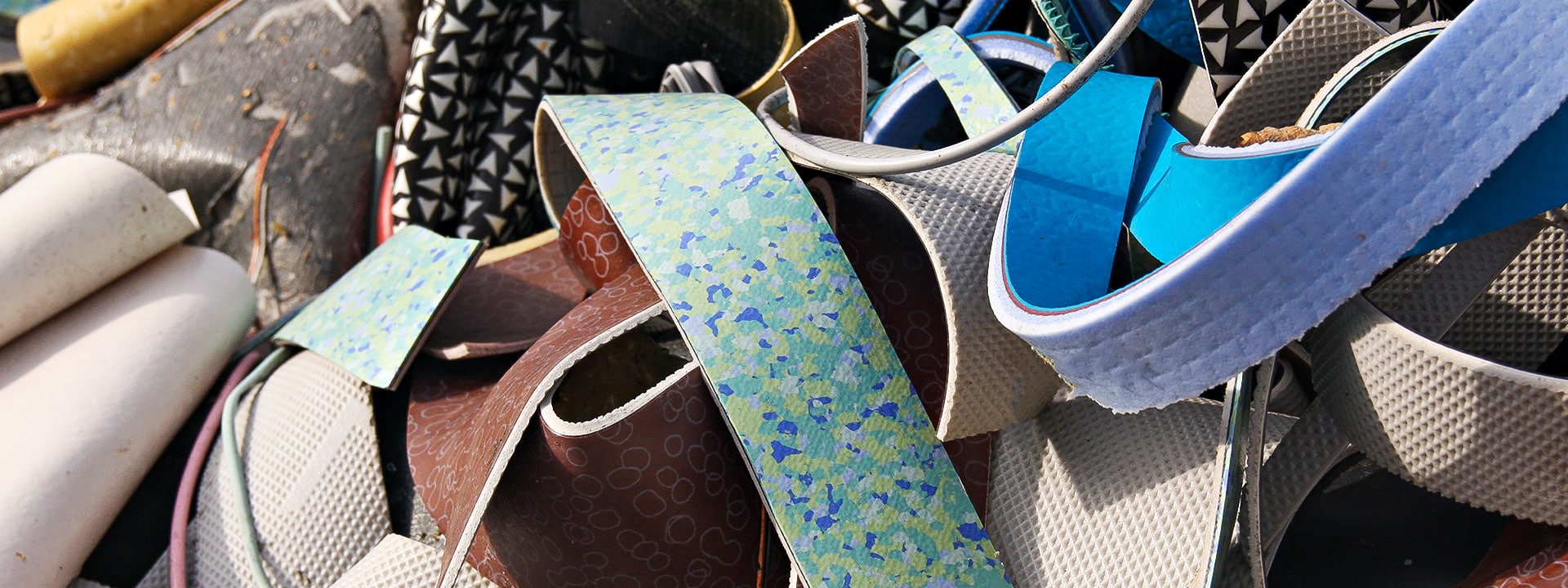
Most people never think about a floor until it has to come up. Then it becomes a problem in tonnes. A single refurbishment of an office building, a school or a hospital can release thousands of square metres of flexible PVC; across Europe, the Circular Flooring project estimated that around 400,000 tonnes of post-consumer PVC flooring waste a year would be enough to support an industrial recycling chain. The material is durable, water-resistant and cheap, and for decades it depended on plasticisers that are now restricted. That combination makes flooring an awkward test case for the circular economy. It is also why the project is still being worked on long after its official end.
The project ran from June 2019 to August 2024 under the European Union’s Horizon 2020 programme, grant agreement 821366, with about €5.4 million in EU funding. It brought together eleven partners from Germany, Belgium, France, Greece and Austria, coordinated by the Fraunhofer Institute for Process Engineering and Packaging IVV in Freising. The consortium covered the chain deliberately: waste collectors and a take-back scheme, a PVC producer, additives specialists, flooring manufacturers, a life-cycle assessment consultancy, a French risk institute, a Greek technical university and a Belgian materials research group. A recycling technology that works in a laboratory but has no feedstock, no buyer and no product standard is not a solution; the project was built to avoid that outcome.
A floor is a chemical archive
The problem it attacked is specific. Flexible PVC flooring contains plasticisers, often phthalates, at percent-level concentrations. Floors installed before the 2000s may contain DEHP, DBP, BBP or DIBP, substances that are now restricted under REACH. Since 2015, DEHP has required authorisation for use in the EU, and recycled material containing 0.1% or more of these phthalates cannot simply be placed on the market in new applications. Mechanical recycling cannot remove a plasticiser that has been compounded into the polymer. Incineration recovers energy but loses the material. The old floor therefore sits at the intersection of two European goals that do not always point the same way: more recycling, and fewer hazardous substances in products.
What the consortium built
The project’s answer was the CreaSolv® process, a solvent-based recycling route developed by Fraunhofer IVV and CreaCycle. Instead of grinding old flooring and hoping contaminants stay below a threshold, the process dissolves the PVC selectively, filters out foreign materials and separates the polymer from plasticisers and other additives. The plasticiser stream is not discarded. It is treated through a combination of transesterification and catalytic hydrogenation and converted into cyclohexanedicarboxylates, the chemical family that includes DINCH, so the carbon returns as a REACH-compliant plasticiser rather than being lost. The recovered PVC is then restabilised and re-plasticised for a second life.
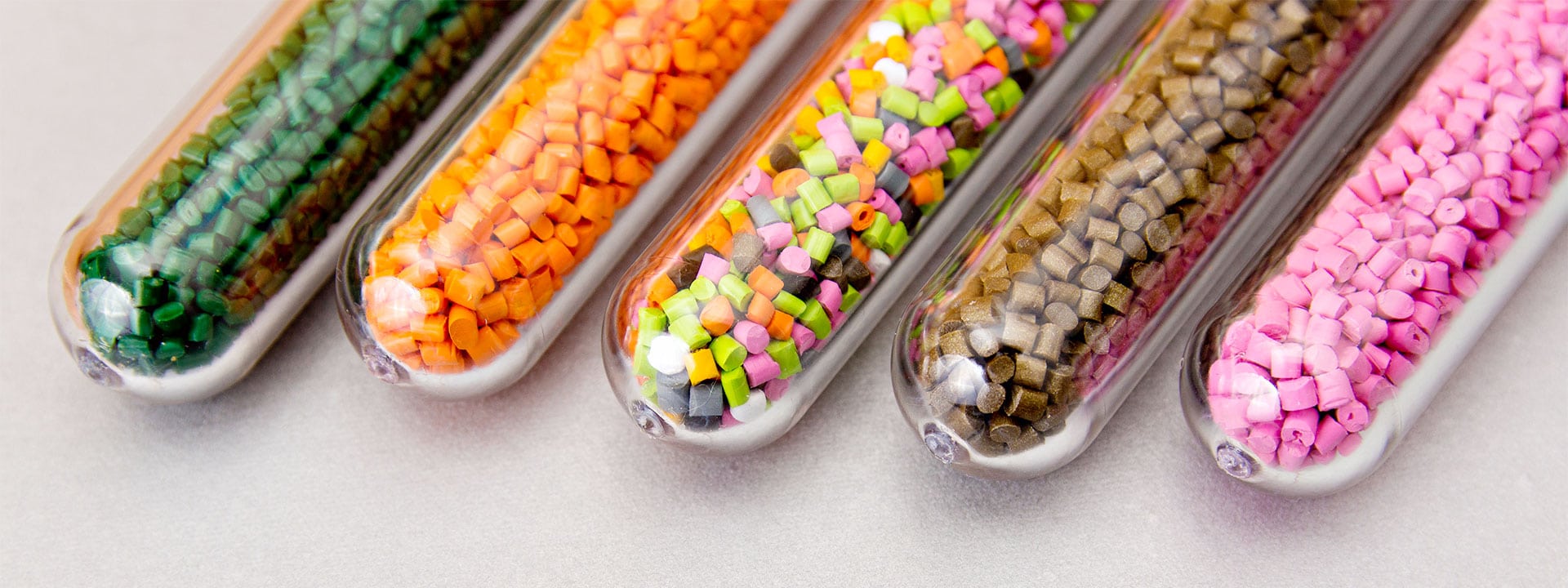
By the time the project closed, the consortium had demonstrated the full loop at pilot scale. The CreaSolv plant in Freising, opened at the end of 2023 and formally presented in spring 2024, runs at 15 to 20 kilograms per hour. That is small in industrial terms, but it was enough to prove the process at technology readiness level 6. The project reported depletion of more than 99% of the regulated phthalates, meeting the REACH 0.1% limit for DEHP, DBP, BBP and DIBP. Several hundred kilograms of recyclate were produced and used by flooring partners in new products. In non-visible layers, such as the bottom layer of luxury vinyl tiles, the recyclate can replace up to 100% of virgin PVC. The visible wear layer is a different matter: colour quality was outside the project’s scope, and that limitation remains.
That quality was the point. “The quality of the PVC recyclate produced on a pilot scale is very good,” said Martin Schlummer, who led the project at Fraunhofer IVV. Schlummer also acknowledged that converting the removed plasticisers “proved more chemically complex than we had at first imagined,” though the consortium ultimately succeeded.
The numbers that decide the future
Those results move the argument past the question of whether recycling is technically possible. The remaining questions are scale, cost and collection. Fraunhofer puts the economic threshold at more than 15,000 tonnes of PVC flooring waste a year. The project’s modelling found that a 10,000-tonne plant would not be profitable, while a 30,000-tonne case produced a net present value above €100 million and an internal rate of return above 32%, assuming recyclate at €1.34 per kilogram and converted plasticiser at €2.50 per kilogram. Those are model results, not a promise. They do show the shape of the problem: the chemistry works at small scale, and the economics only work at large scale.
The life-cycle assessment pointed in the same direction. Cradle-to-gate greenhouse-gas emissions were about 13 kilograms of CO2-equivalent per square metre. At industrial scale, recycling accounted for roughly 20% of that footprint and flooring production for about 65%; the solvent and anti-solvent dominated at laboratory and pilot scale, while energy became the main burden at industrial scale. The environmental case improves as the process moves from batch operations in a pilot plant to a continuous industrial plant with heat recovery. Scale is not only an economic condition; it is an environmental one.
Why the work did not stop at the grant’s end
So why is the project still being worked on? The funded phase is over, but the conditions it identified have not gone away. Europe still has a large installed base of PVC flooring, much of it laid in the 1990s and 2000s and only now reaching the end of a 25 to 30 year service life. The waste exists, but it is dispersed across demolition sites, refurbishments and municipal collection systems. The project’s market work found that the bottleneck is not a shortage of PVC waste but the absence of a joined-up collection and processing infrastructure for post-consumer flooring. A recycling plant needs a predictable feedstock; a refurbishment contractor needs somewhere to send a few hundred square metres of old flooring; a flooring manufacturer needs a consistent recyclate specification. None of those links is automatic.
The pilot plant is part of the answer. Fraunhofer describes it as available to other sectors, including automotive, packaging and construction, for recyclate testing and production trials. A pilot plant is not just a machine; it is a place where manufacturers can handle the material, run their own trials and build the specifications a commercial plant will need. The project also produced less visible assets: a life-cycle assessment, a sustainability passport, quality standards and business cases. Those are what allow an industrial partner to take the next step without starting from zero.
There is a regulatory dimension too. The EU’s circular economy agenda is pushing for more recycled content, while its chemicals rules are pushing in the opposite direction, requiring legacy substances to be removed. The Circular Flooring approach reconciles the two: separate the problematic molecule, convert it into something compliant, and keep the polymer in circulation. That is more demanding than a simple “recycle more” message, but it is the only approach that works for a material stream with a long history of additives. It is also a template for other legacy plastics, including window profiles, cables and roofing membranes, where the same tension between circularity and chemical safety exists.
The next milestones are not scientific
The next milestones are not scientific. They are a first commercial-scale plant, collection schemes that aggregate post-consumer flooring across borders, and product standards that accept recyclate in non-visible layers without demanding virgin-equivalent colour. The project’s final conference in Brussels in July 2024 put the regulatory framework at the centre of the discussion, which was the right instinct: the technology has been demonstrated; the system around it has not yet caught up.
That is also why this page is still being maintained. A publicly funded project does not end when the final report is filed. The results have to remain findable, the pilot plant has to remain visible to the industries that could use it, and the people who specify flooring have to be able to find out what was proven and what was not. Updating the record is part of the exploitation phase, not a departure from it.
The floor is a good place to test circularity precisely because it is unglamorous. It is bulky, heavy, difficult to transport and easy to ignore, and there is a lot of it. The Circular Flooring project proved that the molecule can come back. The work that continues is about making the system willing to take it back.